The Garden and the Ghost
Brazil's "garden quartz" seals a tiny landscape inside clear crystal. It is often sold as "phantom quartz" — but a garden and a phantom are two different things.
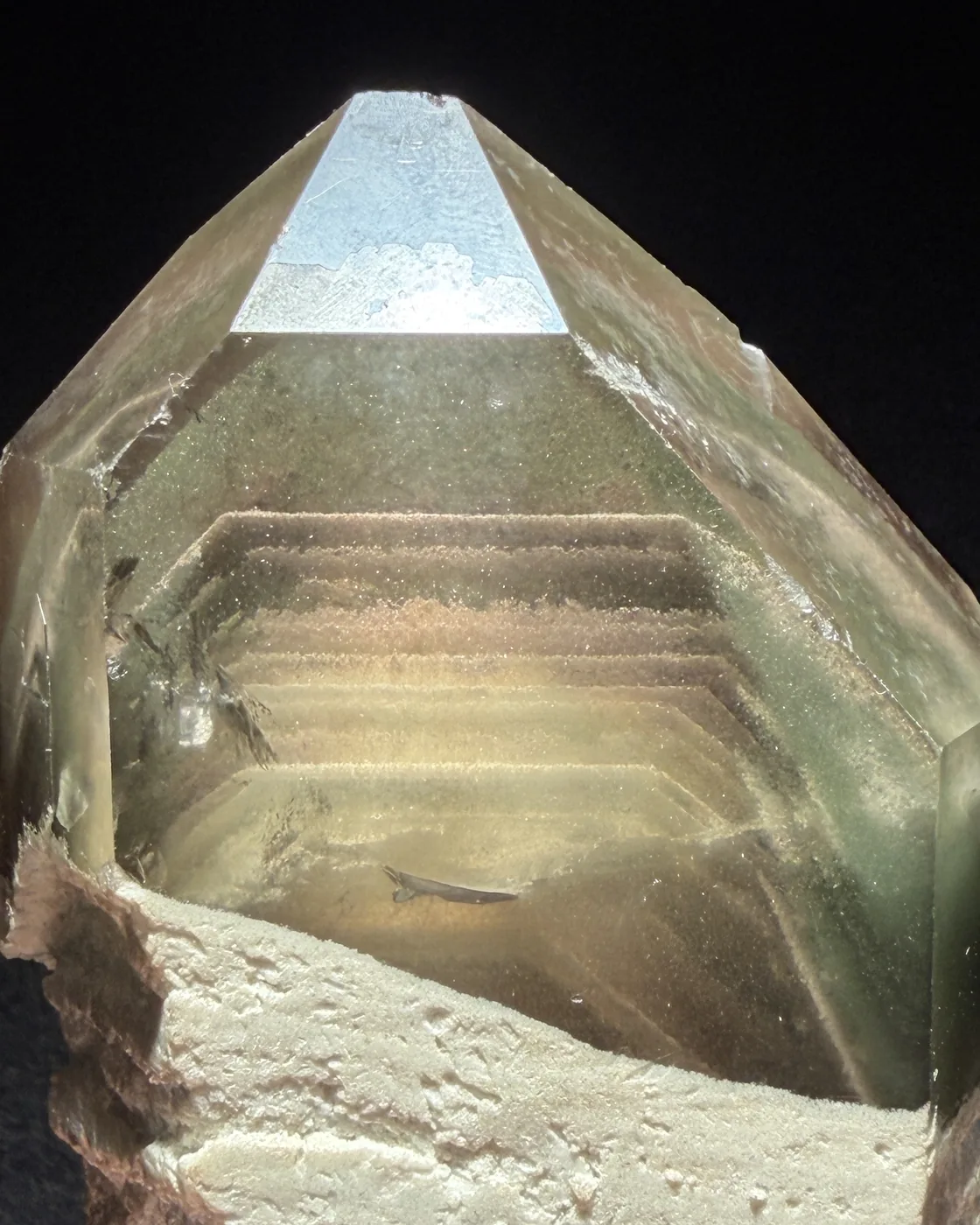
Hold a good piece of garden quartz to the light and a small world opens inside it: mossy greens, rust-red drifts, pale clouds, all suspended in clear crystal like a landscape sealed under glass. The effect is completely natural, and it has earned the stone a shelf of names — garden quartz, scenic quartz, landscape quartz, and the one that travels furthest in the trade, lodolite (sometimes spelled lodalite).
It is worth being precise about that last word, because it does a lot of quiet work. "Lodolite" is not an official mineral name. It is a trade name — the mineral database mindat records it simply as an unofficial name for quartz containing inclusions from Minas Gerais, Brazil, which is where nearly all of it is cut. So a "lodolite" is not a new species; it is ordinary rock crystal — clear quartz — that happens to have grown around other minerals.
What makes the garden
The landscape is made of inclusions: separate minerals caught inside the quartz as it grew. The green is usually chlorite, a leafy-green sheet mineral; the reds and browns are iron oxides such as hematite; the pale patches are often feldspar. The exact mix changes from stone to stone, which is why no two pieces are alike.
Crucially, these inclusions are not damage and not an add-on. The quartz and the minerals inside it grew at the same time — mineralogists call such inclusions syngenetic, meaning "grown together." As a quartz crystal slowly formed in its rock pocket, minerals like chlorite settled against its surfaces and were sealed in as growth continued, each layer recording a small change in the fluids the crystal was bathing in. The garden, in other words, is a genuine record of how the stone formed.
The garden is not the ghost
Here is where the names blur. Garden quartz is very often sold as "phantom quartz," as though the two words meant the same thing. They do not, and the difference is worth knowing.
A phantom is a specific thing: the ghostly outline of an earlier, smaller crystal preserved inside a larger one. It forms when a growing crystal pauses, a thin layer of some other mineral settles evenly across its faces, and then growth resumes and buries that layer. The trapped film traces the exact shape the crystal had at the moment it paused — so you see a faint, complete smaller crystal nested inside the big one, like a memory of its younger self. Stack several pauses and you get several nested phantoms.
A garden is different. Its inclusions are scattered through the stone in three dimensions, making a scene; they need not follow the outline of any earlier crystal face. One is a landscape; the other is a layered ghost of the crystal's own shape.
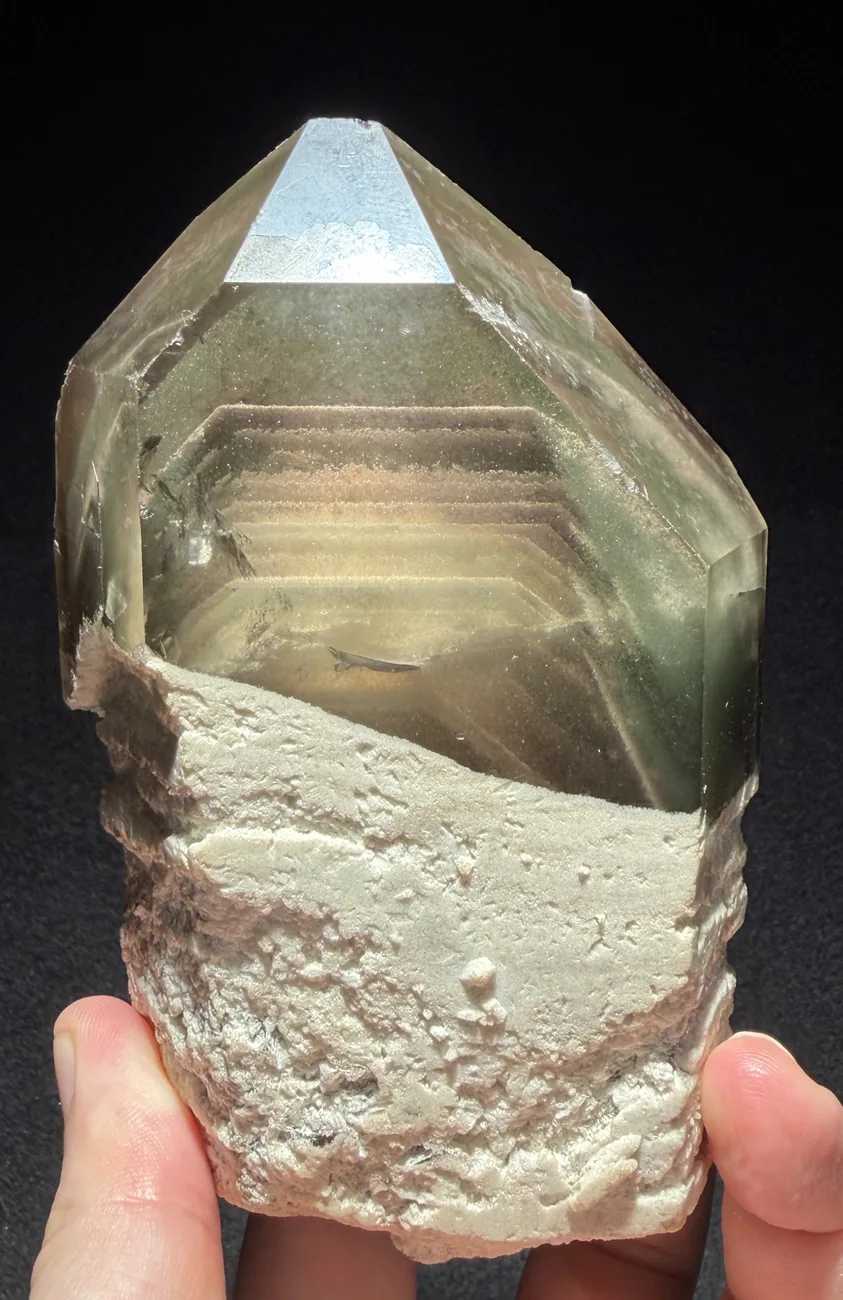
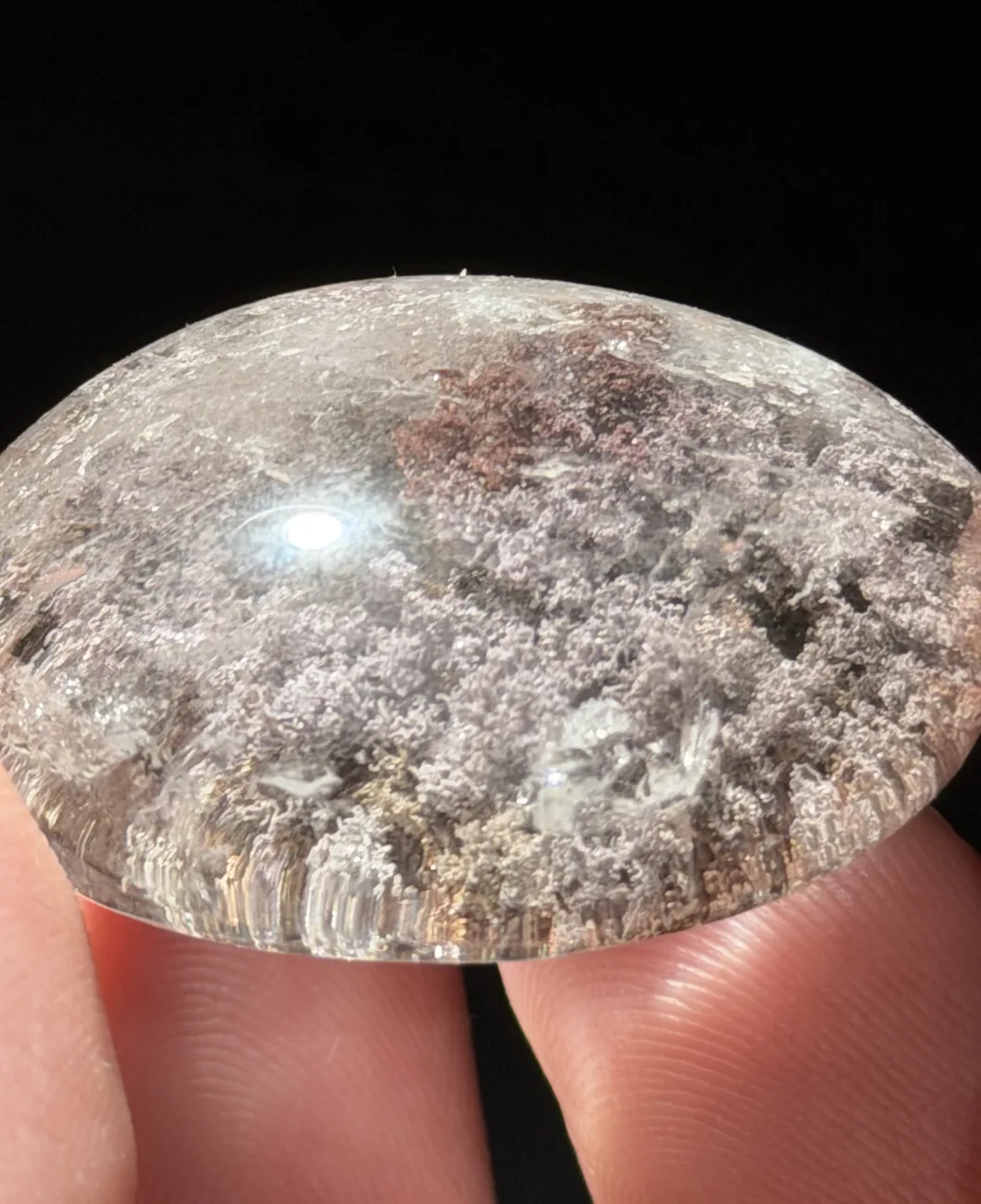
The two can occur together — a single stone may hold both a scenic garden and a true phantom — but they need not, and in practice they often don't. Much of the garden quartz we handle carries no phantom at all: the scenic inclusions are there, the nested ghost-crystal is not. That is the plain evidence that "garden" and "phantom" are two separate features, not one thing under two names. The standard mineralogical references keep them apart for exactly this reason: the authoritative quartz literature files this scenic material under inclusions, and treats phantoms as a separate growth feature entirely — it does not use the word "lodolite" at all.
Why it matters
None of this is a knock against garden quartz, which is one of the more quietly absorbing things quartz does. It is simply a matter of calling the stone what it is. A garden is a landscape of other minerals sealed inside clear quartz as it grew. A phantom is the crystal's own earlier shape, held like an afterimage in its interior. Sometimes a specimen offers both; often it offers only the garden. Knowing which you are looking at is the difference between reading a scene and reading the crystal's growth history — and both, in their way, are worth the look.
Information in this article is current as of July 2026.
← All journal entries