Why Most "Citrine" Was Once Amethyst
The golden quartz hides a quiet disagreement between mineralogists and the gem trade — and knowing which "citrine" you're holding changes what you've actually bought.
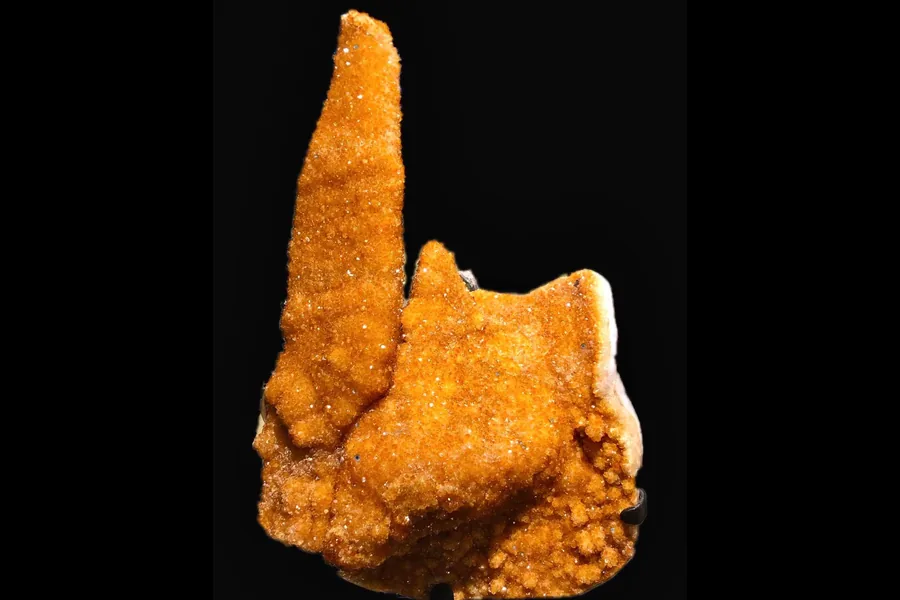
Citrine — golden-yellow quartz — is one of the most misunderstood stones in the trade. Not because it is complicated to look at, but because two expert communities do not fully agree on what the word even means. Untangling that disagreement is the single most useful thing a buyer can learn about it.
Two different "citrines"
There are really two materials wearing the same name.
Heated amethyst. The large majority of commercial citrine is amethyst — abundant and inexpensive — that has been heated above roughly 440 °C. The heat precipitates fine iron particles (minerals like hematite and goethite) through the crystal, and those particles produce the yellow-to-orange colour. Mindat, a mineralogical reference rather than trade copy, puts it bluntly: "heated amethyst is not citrine in the strict sense."
Natural, strict-sense citrine. Genuinely natural citrine is coloured by something quite different: not iron particles, but colour centres — light-trapping defects tied to aluminium in the crystal and created by natural radiation, closely related to those in smoky quartz. Even here honesty is required: mindat notes the exact cause is "still under debate."
The gem-trade view (as GIA describes it) simply calls the heated product citrine and attributes the colour to "a trace of iron." So the two camps disagree on the word, not on the physics — both accept that heating amethyst yields a yellow, iron-coloured quartz; they differ on whether that product deserves the name citrine.
Telling them apart
No single test by eye is conclusive, and it is important to know what each one actually proves.
Dichroism — the way some crystals show two different colours when viewed down different directions — is the classic check. Natural citrine shows it; heated amethyst does not. But note the limit carefully: dichroism only rules out heated amethyst. It does not prove a stone is natural, because irradiated "lemon quartz" is dichroic too. As mindat says, it "just means it is not heated amethyst."
Colour zoning is the more everyday tell. Heated amethyst keeps amethyst's distribution — colour concentrated at the crystal tips, paling toward the base — and tends to a deeper orange or reddish-brown. Natural citrine is usually more evenly coloured, and paler, a soft lemon. Beyond that, only laboratory analysis gives a definitive answer.
The rarity question, honestly
You will often read that natural citrine is "very rare" and that most citrine on the market is heated amethyst. Both the trade and mindat say so. But "rare" here is a comparative claim — rare relative to amethyst and to trade volume — not "almost never found": the same references list hundreds of localities and metre-size crystals. In the specimen wholesale trade, natural smoky-citrine is in practice a good deal more available than its reputation suggests. The lesson is to treat "rare," used as a price signal, with some care.
What actually matters
Heated amethyst is not a fake. It is a legitimate, stable, universally accepted treatment — and a beautiful stone. What matters is disclosure: a reputable seller will tell you whether a stone is natural or heat-treated, and price it accordingly. The one thing to be wary of is orange quartz sold, without that distinction, at a natural-citrine price. Put plainly: you may be paying citrine prices for cooked amethyst — which is fine if you know it, and a problem if you don't.
A closing curiosity: ametrine, from Bolivia, shows amethyst-purple and citrine-yellow together in a single natural crystal — natural yellow quartz and amethyst, side by side, from the same piece of ground.
Recommended Pieces
Information in this article is current as of July 2026.
← All journal entries