Why Some Fluorites Are Cubes
All fluorite shares one cubic lattice, yet it grows as cubes, octahedra and stranger things besides. The shape is set by the fluid it grew from, and one common shape may never have been grown at all.
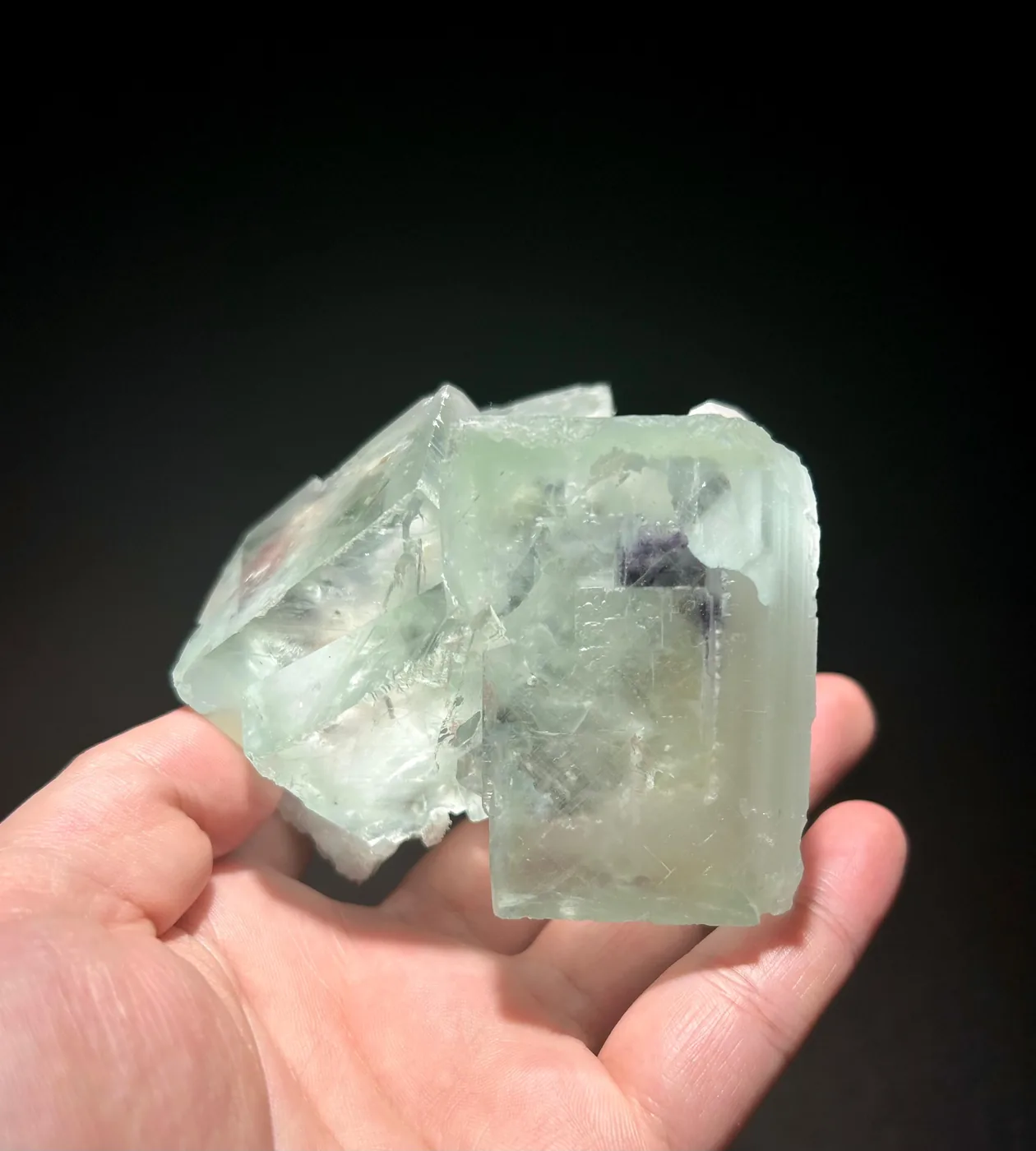
Put a cubic fluorite next to an octahedral one and the obvious question is what makes them different. It is not chemistry. Both are calcium fluoride, grown on the same internal scaffolding: fluorite crystallises in the isometric, or cubic, system, meaning its atoms are arranged with the symmetry of a cube whatever outward shape the crystal ends up taking.
What differs is habit, the shape an individual crystal actually develops. The mineral does not decide it. The conditions of growth do.
The shapes on offer
The lattice permits more forms than most collectors ever see. mindat lists seven main crystal forms for fluorite. Three are familiar: the cube, the octahedron (eight triangular faces, like two square pyramids base to base), and the rhombic dodecahedron (twelve diamond-shaped faces).
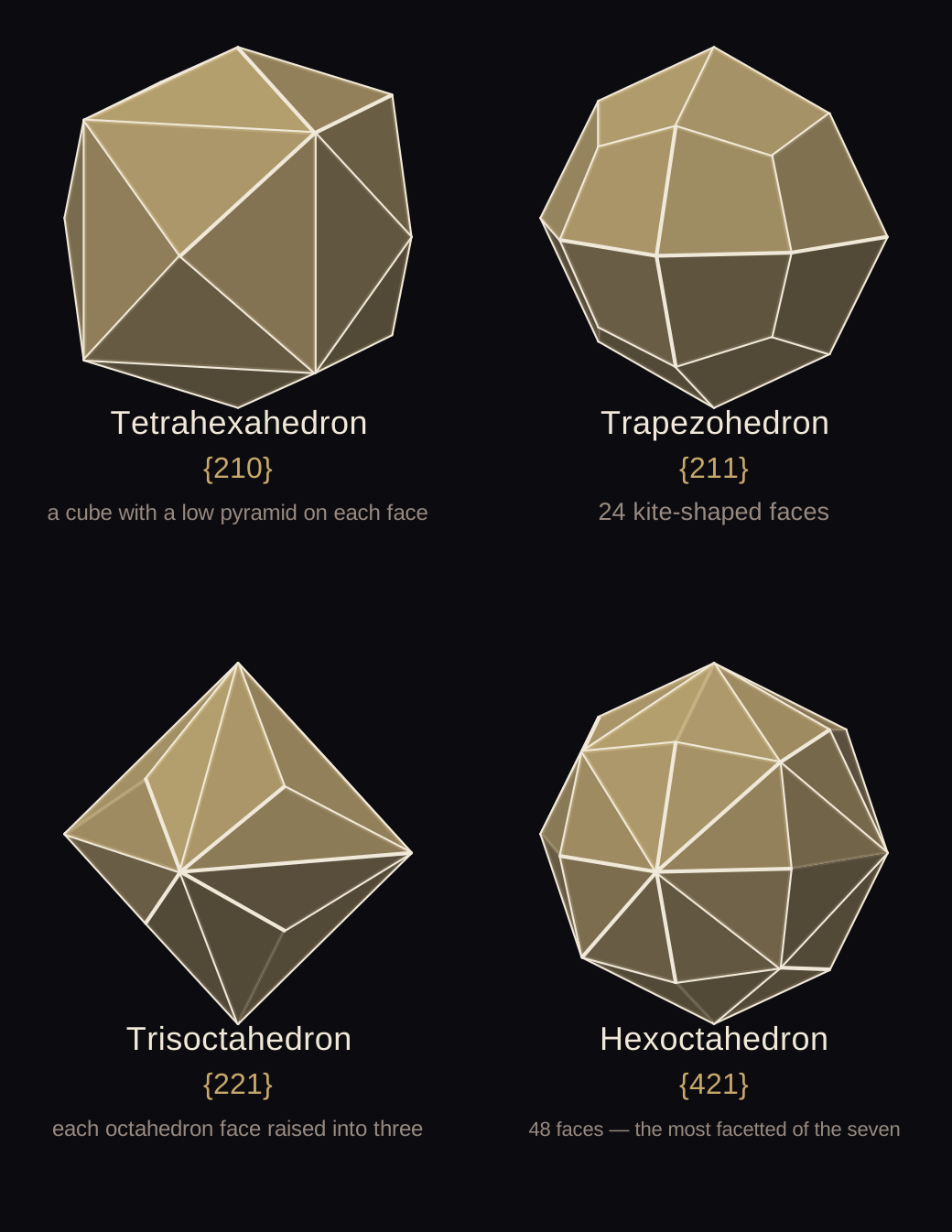
The other four run from less common to rare. A tetrahexahedron is a cube with a low pyramid on each face. Twenty-four kite-shaped faces make a trapezohedron, while a trisoctahedron raises each face of an octahedron into three. Most facetted of all is the hexoctahedron, at forty-eight faces.
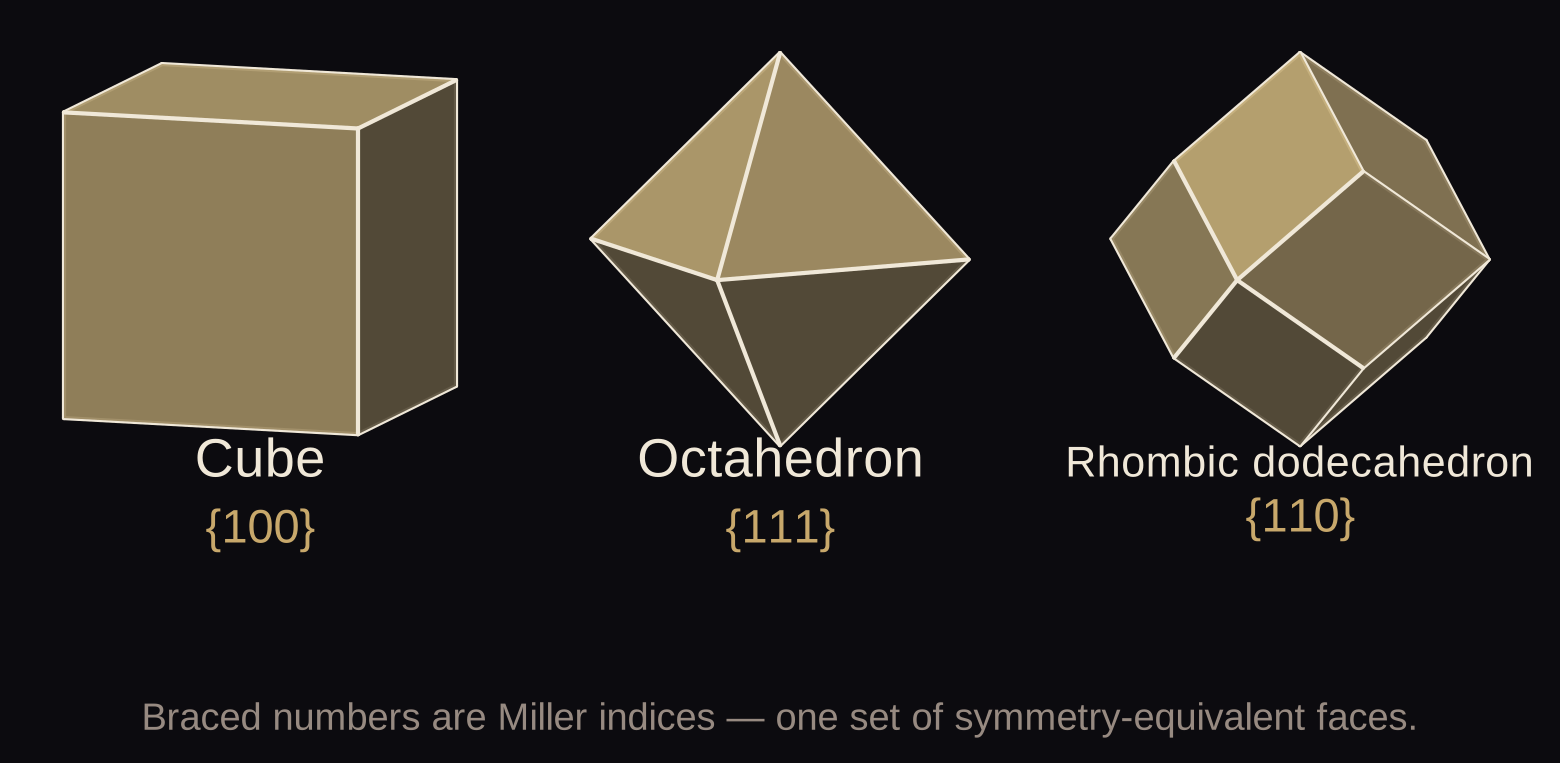
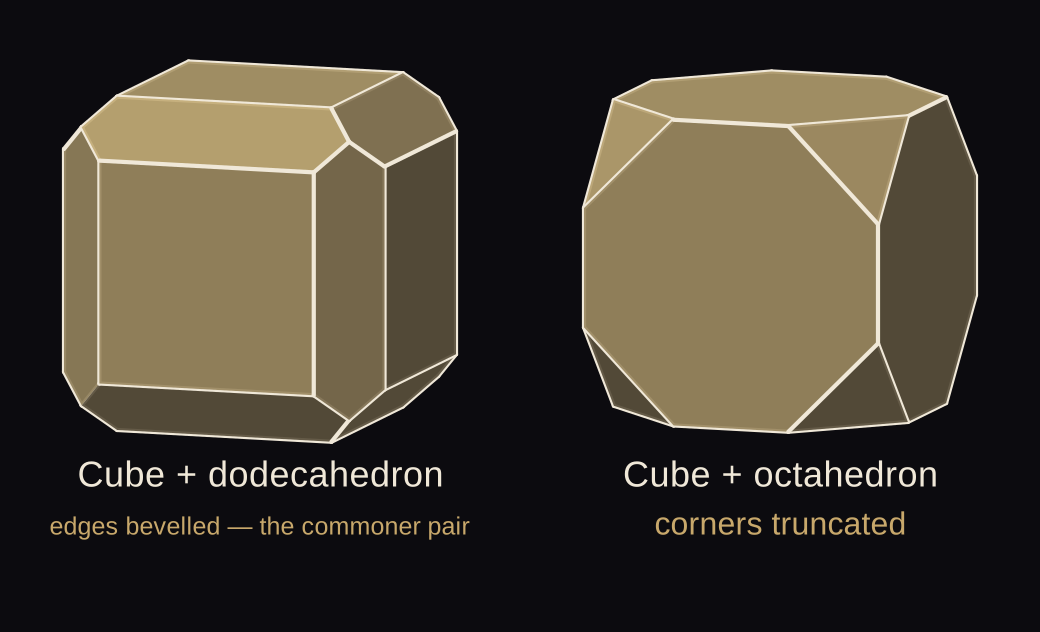
The cube is the commonest and the most recognisable. But single clean forms are only part of the story: combinations of two or more forms are common, and they are not evenly distributed. Cube-plus-dodecahedron turns up more often than cube-plus-octahedron.
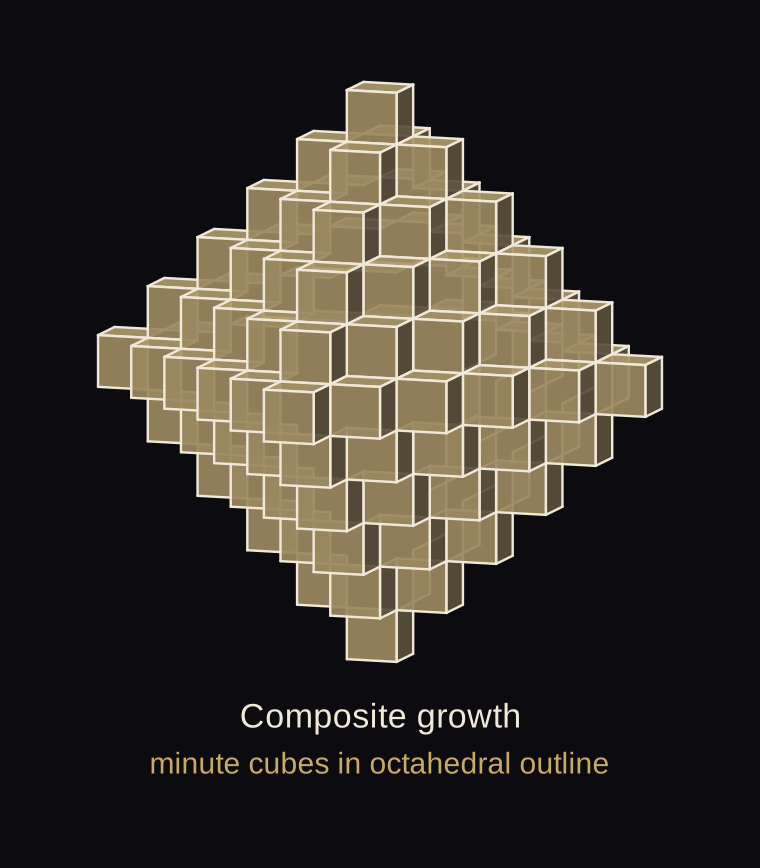
Fluorite also grows in odder ways. mindat records crystals distorted by the unequal development of their faces, overgrowths perched on the corners of an earlier crystal of a different habit, and minute cubes aggregated into the shape of an octahedron. That last one is a single-source observation, so treat it as reported rather than established.
What decides it
The controlling principle is consistent across the sources: habit depends on the conditions of crystallisation — space, fluid chemistry, competition with neighbouring grains, and heat.
Of those, temperature is the one these sources actually document for fluorite, and from two independent directions. The University of Minnesota's mineral reference states that fluorite forming from higher-temperature fluids tends to occur as octahedra, and from lower-temperature fluids tends to occur as cubes.
Separately, a peer-reviewed study of the Nabburg-Wölsendorf fluorite district (Dill & Weber, 2010) found its considerable variety of form resolved into three temperature-controlled sequences. The authors concluded that the crystal morphology of its fluorite veins is controlled by temperature, in a band between roughly 100 °C and 200 °C, together with the depth of the mineralisation and its hydraulic setting — how the fluid moved through the rock.
"Tends" is doing real work. This is an empirical tendency, not a law, and the district study does not map each individual form onto a specific temperature.
The principle — that temperature governs which habit develops — is well corroborated. Its direction is not. That hotter fluids favour octahedra and cooler ones cubes rests plainly on one institutional source, with the peer-reviewed study consistent with it. That is well short of settled.
The part the sources leave open
None of the sources gathered for this piece explains the face-level mechanism: why, in a hotter fluid, the octahedral faces should tend to win out over the cubic ones. Relative growth rates could do it. So could saturation, or something adsorbing (sticking) onto particular faces. The literature at hand does not say.
Fluorite's colours come from minor impurities, and colour zoning records shifts in the fluid's chemistry. But none of these sources connects a colour to a habit. Nor do they claim the two are independent. They are reported as separate observations.
The octahedron that was never grown
Fluorite has perfect octahedral cleavage: four directions of weakness, running parallel to its octahedral faces, along which it splits cleanly. Break a fluorite of any habit and it will part into neat octahedral fragments.
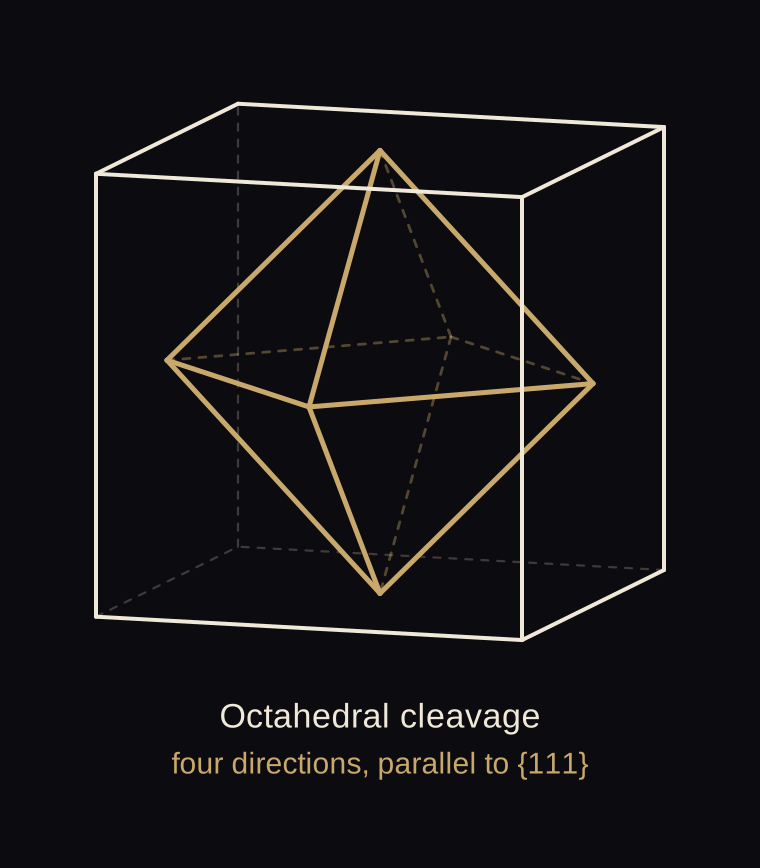
That makes an octahedral fluorite genuinely two possible objects. One is a crystal whose octahedral faces grew. The other is a fragment cleaved out of something else entirely, perhaps out of a cube. What separates them is whether the piece shows natural faces. Only one of the two is a record of growth.
Twins
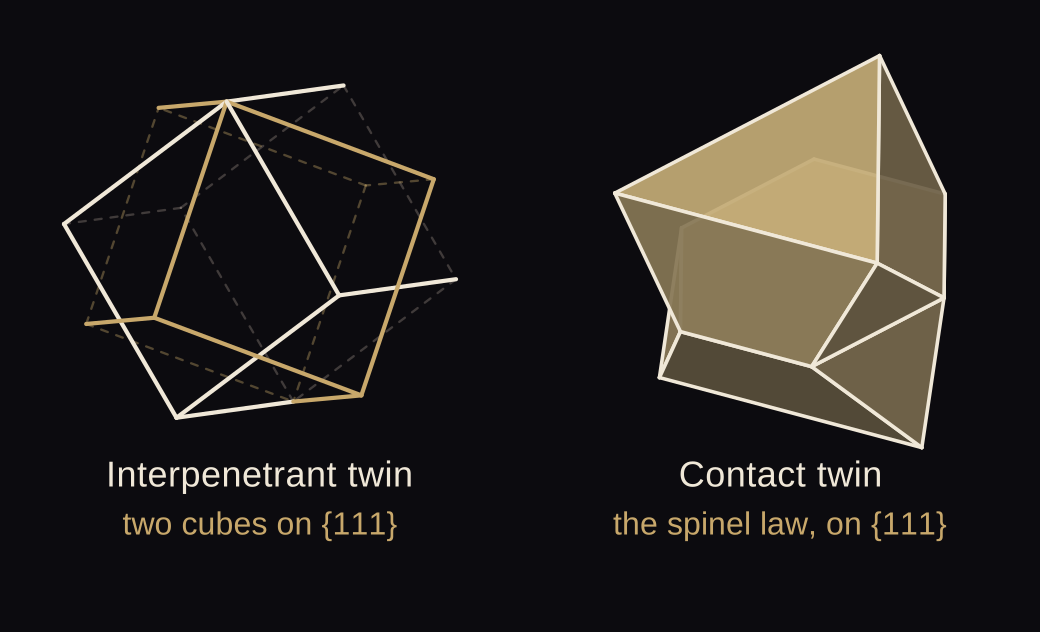
Twinning, where two crystals grow together in a fixed symmetrical relationship, is common in fluorite on the octahedral plane. Its classic expression is the interpenetrating cube: two cubes grown symmetrically through each other, as at Strzegom in Poland. Contact twins — joined along a shared plane rather than grown through one another — occur too, at Naica in Mexico and Chumar Bakhoor in Pakistan among others.
A fluorite's shape is a record of the fluid it grew in — above all of how hot it was — and of what happened to the crystal afterwards. Part of that record these sources can read. The rest they leave open.
Recommended Pieces
Information in this article is current as of July 2026.
← All journal entries